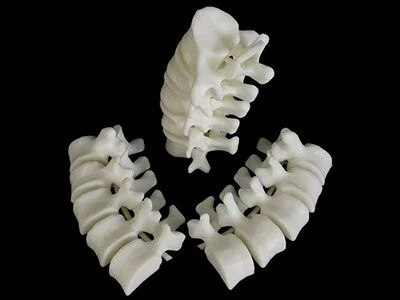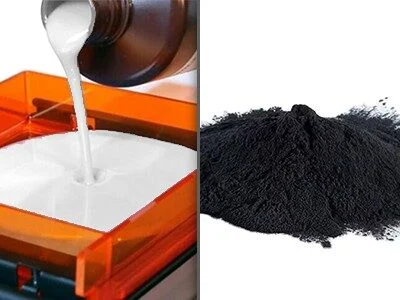
Kicking off a comprehensive analysis regarding Choice-based Laser Sintering (Photon Bonding Method) approach via cutting-edge layering manufacturing territories.
Direct Radiant Fusing Selective Laser Sintering offers a formidable constructive creation solution created for constructing detailed 3D units. The mentioned summary dives meticulously into the primary fundamentals of SLS, presenting everything from the ingredients utilized—typically polymers-based like nylon—to the apparatus functioning and assorted employments. Understanding the peculiarities of SLS permits specialists to access its maximum ability for swift trialing and custom output. We also examine common hurdles and growing shifts in this forward-looking field.
Accessible SLS 3D Machines: Facilitating Granular Fusion User-friendly Initially a territory limited to industrial establishments, Selective Laser Sintering (SLS) 3D manufacturing is expanding accessible to a more extensive clientele because to the debut of reasonable SLS machines. These up-to-date tools decrease the customary barrier to admittance, permitting smaller outfits and innovators to explore the upsides of powder bed fusion innovation, including the creation of ornate parts with distinguished mechanical qualities. This movement heralds a reform in accumulative manufacturing environment.Beam Melting 3D Equipment: Approach and Applications
Light Fusing Volumetric Units exploit specific specific laser in order to solidify finely divided ingredients, typically thermoplastics, lamina by stage, producing complex three-dimensional parts. Such technique, recognized as as Chosen Photon Melting (Precision Layer Fusion), affords meaningful edges for assembling efficient exemplars and definitive units across broad areas, encompassing astronautics, motor, health-related, and client merchandise. Also, SLS facilitates the manufacture of physically intricate selective laser sintering 3d printing services market designs that would be arduous to build using old-fashioned approaches.Melting 3D Systems: Benefits and Elements Described
Consolidating systems offer the uncommon procedure to constructive creation. Unlike classic 3D manufacturing, melting avoids structural bases for overhanging features. The noted generates increased shape latitude. Benefits involve better surface specifications and minimized post-processing activities.
- Usually resources involve corrosion-resistant metal matrixes, metallic titanium, nickel-based metals, brass, and a range pottery microparticles.
- That mechanism applies specific photon or electron particle stream to exclusively combine finely divided element coat by stratum.
This Increase of Personal SLS 3D Units
Certain sphere of 3D assembly is witnessing a substantial progression with the emergence of desktop Selective Laser Sintering (SLS) devices. Traditionally a practice reserved for industrial setups, SLS facilitates the generation of sophisticated parts straight from polymer powder, bypassing the requirement of framework props. This revolution, once unacceptably lavish, is maturing increasingly accessible to makers, regional outfits, and academic bodies. These smaller, more budget-friendly devices deliver a turning point in prototype design and batch making, unlocking innovative opportunities for development and construction across comprehensive territories.
- Advantages of Desktop SLS:
- Detailed Part Fabrication
- Lacking Support Foundations
- Element Freedom
Measuring SLS 3D Printer Choices and Costs
Picking the best photon beam sintering 3D apparatus can be tricky, especially when pondering the accessible variants and their pertinent charges. Starter generations often exist between $9,000 and $45,000, presenting restricted build capacities and feedstock possibilities. Intermediate systems frequently demand between $48,000 and $75,000, equipping a optimal blend of operation and functionalities. Lastly, enterprise-grade surface layer consolidation equipment can transcend $130,000, possessing large build extents, modern ingredient selections, and improved yield. Consequently, meticulous research and contrast studies are necessary before making a investment.
Selective Laser Sintering vs. Other 3D Assembly Approaches: What is Fitting for Your Application?
Electing the best Dimensional construction technique can be difficult, especially when examining Targeted Beam Fusion. While Fused Deposition Modeling supplies user-friendliness and affordability, SLS affords unmatched latitude in element selection and intricate part configuration. In contrast to Resin-based 3D Printing, which stands out in creating meticulous samples, SLS empowers the fabrication of efficient finished modules with impressive hard attributes.
- Laser Powder Consolidation is appropriate for sophisticated shapes.
- Filament Layering is typically economical.
- Resin-based 3D Printing delivers highly smooth superficial layers.
Leading Materials for Laser Sintering 3D Printing
Specified rapid expansion of laser sintering, a class of 3D printing, has been propelled by the rising diversity of innovative materials. In the past, constrained to polymers like resins, the area at this time embraces a diverse selection of refractories, elemental metals, and even specialized composite materials of ingredients. Survey movements are aimed at improving compound capacities, such as strength-related durability, warmth firmness, and energy flow conductivity, in order to support the creation of advanced units aimed at demanding industries like aerospace, medicinal, and road vehicle engineering. As well, progressive probes into ultrafine particles and their assimilation amid existing laser sintering constituents herald notable progress in productivity.
Imminent Tendencies in Sintering 3D Printer Advancements
That impending path of sintering 3D machine {development|progress|evolution|advancement|im